
POPULATION OF FOCUS
BIRTH EQUITY
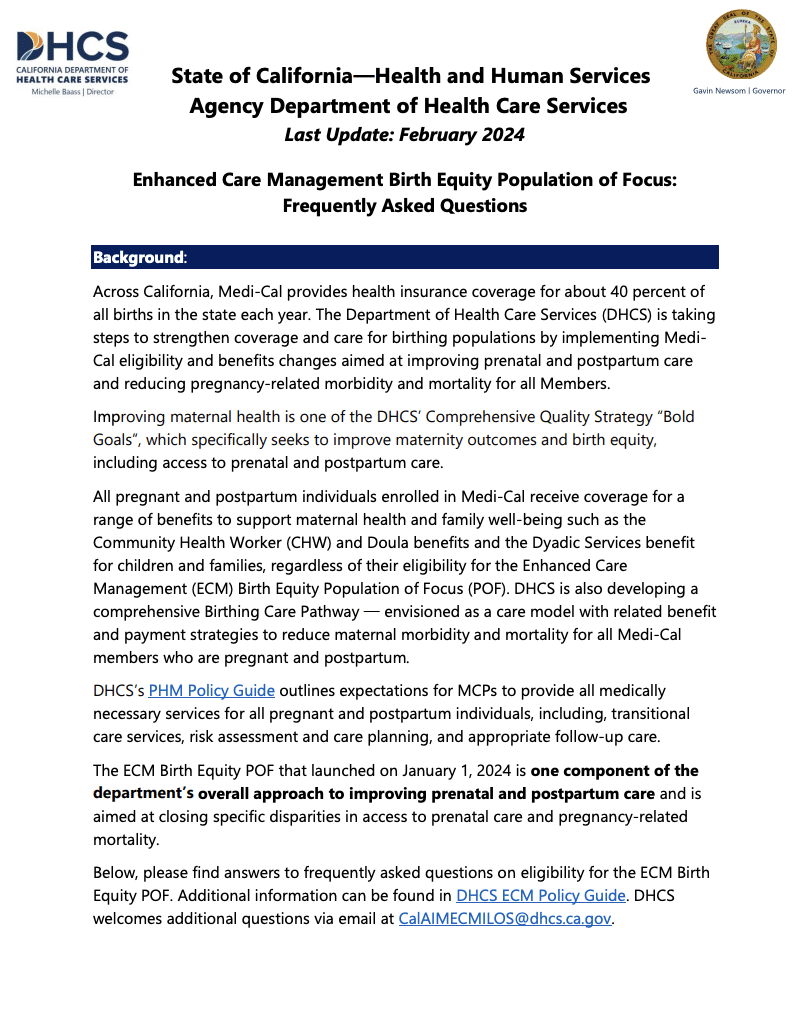
Birth Equity
- Adults and youth who: (1) Are pregnant OR are postpartum (through 12 months period); AND (2) Are subject to racial and ethnic disparities as defined by California public health data on maternal morbidity and mortality.
- Clause (1) with “pregnant or are postpartum,” with “postpartum” period defined as the 12-month period following the last day of the pregnancy (irrespective of whether live or stillbirth delivery, or spontaneous or therapeutic abortion).
- Clause (2) is identified based on the California Department of Public Health’s (CDPH) most recent state public health data available on the Women/Maternal Dashboard Home Page (including the Pregnancy Related Mortality, Selected Maternal Complications, and Severe Maternal Morbidity Dashboards).
- Examples of eligible MCP members include Black, American Indian or Alaska Native, or Pacific Islander Member who is pregnant or postpartum (up to 12 months) and does not qualify for ECM through another Population of Focus.
Enhanced Care Management Birth Equity Population of Focus: Frequently Asked Questions
Key Services
The below Community Supports can help community members experiencing homelessness.
Housing Deposits
Help members with the one-time services, such as security or utility deposits, that they need to establish a safe household.
Housing Tenancy and Sustaining Services
Support to maintain safe and stable tenancy once housing is secured, such as working with landlords to address issues, helping with the annual housing recertification process and connecting the member to community resources to prevent eviction.
Housing Transition Navigation Services
Assistance to find, apply for and secure housing
Transitional Rent (starting Summer 2025)
A maximum of six months of rental assistance to help Medi-Cal members experiencing homelessness or housing instability secure stable housing during critical transition periods.
Medically Supportive Food/Meals/Medically Tailored Meals
Deliveries of nutritious groceries or prepared meals along with vouchers for healthy food and/or nutrition education
Sobering Centers
Facilities that provide a safe, supervised environment for individuals to recover from acute intoxication, often as an alternative to jail or emergency room visits
Asthma Remediation
Home modifications to avoid serious asthma episodes. Modifications can include filtered vacuums, dehumidifiers, air filters and ventilation improvements
By the Numbers
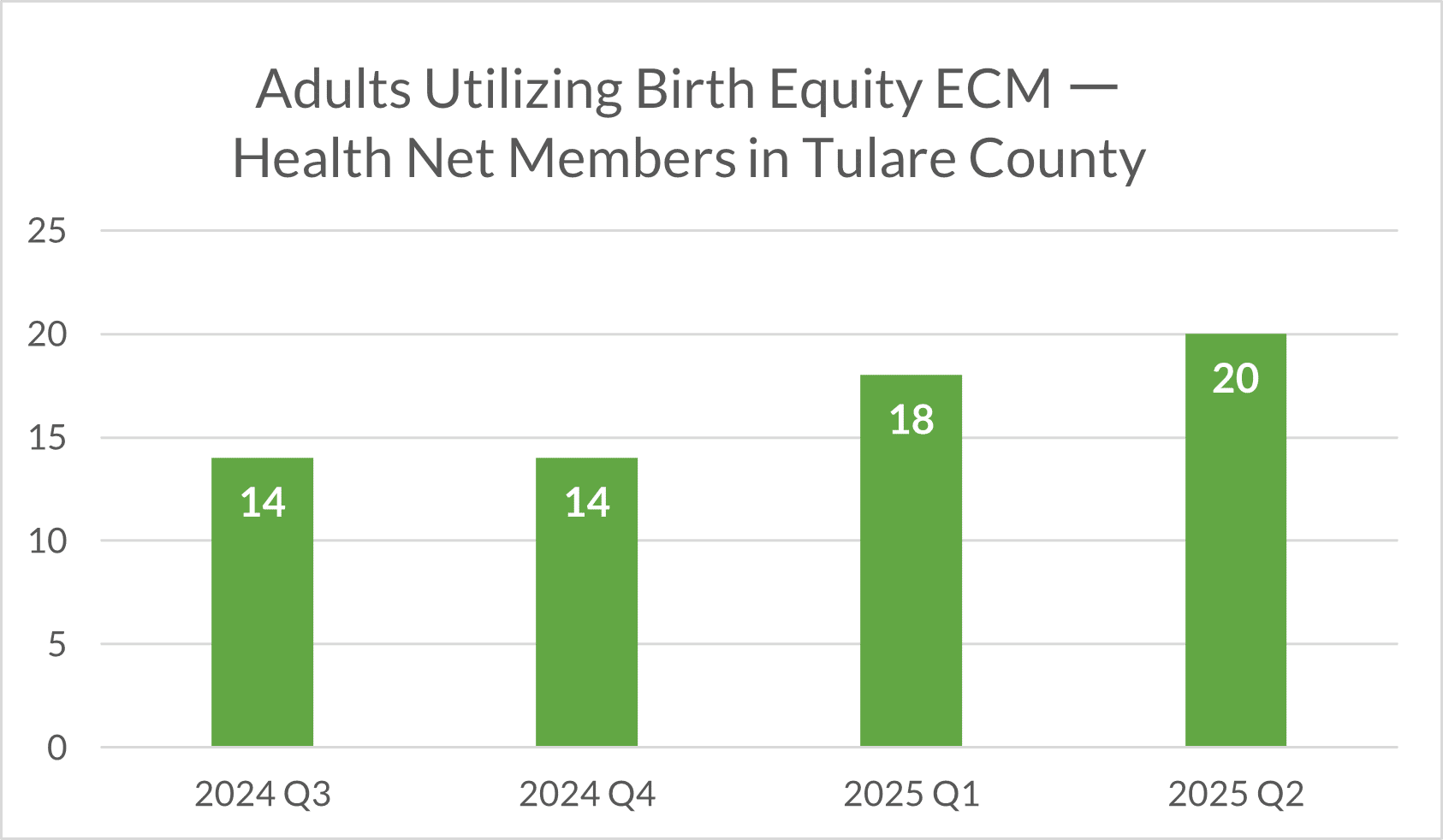
This chart shows data through June 2025. No ECM utilization in this Population of Focus was recorded in Kings County or among Anthem members or children and youth in Tulare County.
Key Community Partners










System of Care Map
A System of Care Asset Map is a tool designed to assess and describe the services available to specific populations, such as the homeless, individuals with mental health or substance use disorders, justice-involved individuals, and more. This map outlines existing community assets and identifies gaps in service offerings across a continuum of care, from immediate needs to long-term support, providing a holistic view of the system. By visualizing these resources, the tool helps evaluate whether parts of the continuum are well-developed, underdeveloped, reactive, or proactive.
When combined with population-specific data, a System of Care Asset Map highlights areas for improvement and informs strategic planning. It serves as a resource for service providers, featuring hyperlinks to partner agencies for easy access and collaboration, and supports community-driven planning to fill service gaps. It incorporates community insights through research, interviews, and local reviews and is designed to be updated regularly to reflect changes in available services.